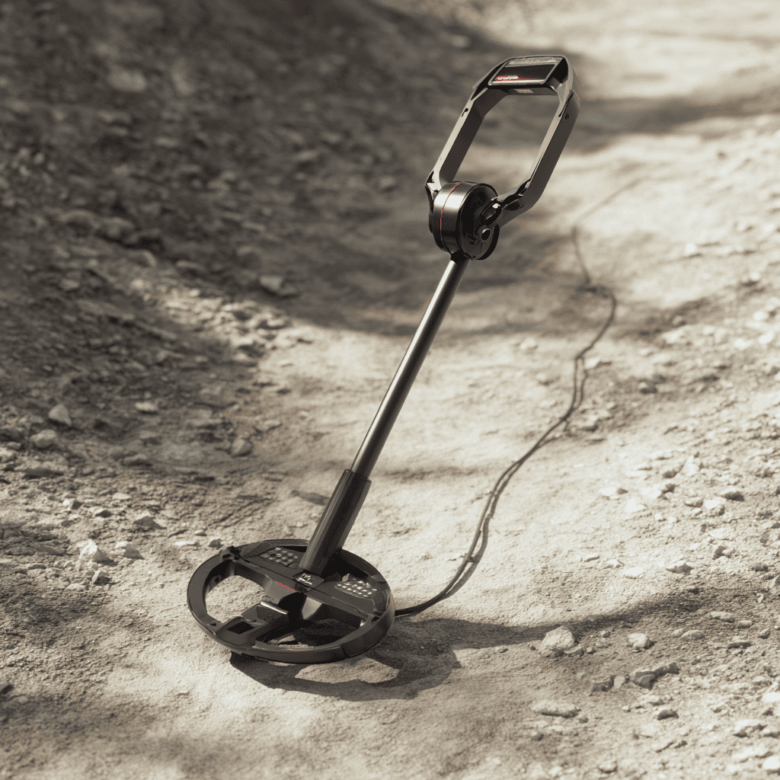
Every well driller knows the feeling. The rig is set up, the drill bit begins to turn, and the meters start ticking. With every foot of depth, costs accumulate. Fuel, labor, equipment wear, and casing materials add up quickly. And yet, until the drill reaches its target depth, no one knows for certain what lies beneath. Will it be water—clean, abundant, life-giving water? Or will it be dry rock, fractured shale, or a weak seep that barely fills a bucket? For generations, this uncertainty has been an accepted risk of well drilling. But acceptance is not the same as wisdom. The wise well is not dug by hope alone; it is guided by science. An underground water detector transforms the gamble of blind drilling into a confident, data-driven investment, saving time, money, and frustration while delivering the reliable water that communities and farms need to thrive.
The economic case for precision groundwater detection is overwhelming. Failed wells are not merely disappointing; they are financially devastating. The equipment costs, the wasted labor, the lost opportunity—all of it could have been avoided with a simple survey before the drill ever touched the ground. The wise well begins not with a rig, but with a detector.
The High Cost Of Guesswork
 To understand the value of an underground water detector, one must first understand the true cost of drilling blind. Consider a typical well drilling project:
-
Mobilization and setup: Transporting equipment to the site, often over difficult terrain
-
Drilling costs: Hourly rates for the rig, fuel, and operator
-
Casing and materials: Steel or PVC pipe, gravel pack, screens, and seals
-
Completion and testing: Developing the well, pumping tests, water quality analysis
-
Contingency: Dealing with unexpected challenges like stuck drill bits or collapsed boreholes
A single failed well can easily cost tens of thousands of dollars—money that a farmer, community, or small business may have spent years saving. And that is just the direct financial cost. The indirect costs are equally painful: delayed access to water, lost growing seasons, diminished crop yields, and the erosion of confidence that future projects will succeed.
Now multiply that risk across multiple wells. A development organization drilling a dozen wells in a region might accept a certain failure rate as “inevitable.” But is it truly inevitable? Or is it simply the cost of using outdated methods?
Precision Detection: The Wise Investment
An underground water detector is not an expense; it is an investment that pays for itself many times over. The cost of a professional detection survey is a fraction of the cost of a single failed well. And the return on that investment is not just financial—it is measured in reliable water, successful projects, and peace of mind.
Modern detection technology offers several approaches, each suited to different conditions:
Electrical Resistivity Tomography (ERT)
This method creates a detailed vertical image of the subsurface. By measuring how electrical currents flow through different materials, ERT identifies zones of high conductivity—the signature of water-saturated rock or sediment. The result is a cross-sectional map showing the depth, thickness, and geometry of potential aquifers.
Ground Penetrating Radar (GPR)
For shallow aquifers and alluvial environments, GPR provides remarkable resolution. Radar waves penetrate the ground and reflect off boundaries between different materials. Water tables, sediment layers, and even the top of bedrock can be visualized clearly.
Electromagnetic (EM) Surveys
EM methods are excellent for rapid reconnaissance over large areas. The instrument induces a magnetic field and measures the response of subsurface materials. Conductivity maps reveal patterns of water-bearing zones, clay layers, and bedrock topography.
Seismic Refraction
By measuring how sound waves travel through different materials, seismic surveys identify the depth to bedrock and the thickness of overlying sediments. This information is critical for understanding the geological context of potential aquifers.
Each of these methods provides specific, actionable information. Used together or separately, they eliminate the guesswork that has plagued well drilling for centuries.
The Workflow: From Detection To Production
Integrating an underground water detector into a well drilling project follows a logical, efficient workflow:
Step One: Desktop Study
Before any field work, a wise well planner reviews existing data: geological maps, reports from nearby wells, satellite imagery, and any available information about the local aquifer system. This initial research focuses the detection effort on the most promising areas.
Step Two: Field Survey
The detection team deploys the appropriate instruments across the target area. Depending on the method, this may involve walking transects with portable equipment or placing electrodes or geophones along survey lines. The field work is non-invasive, leaves no lasting impact, and can be completed in days rather than weeks.
Step Three: Data Processing And Interpretation
Raw detection data is processed using specialized software to create interpretable maps and profiles. Experienced hydrogeologists analyze these results, identifying the single most promising location for the well, along with estimates of depth, yield, and water quality.
Step Four: Targeted Drilling
Armed with specific coordinates and depth targets, the drilling crew mobilizes. They know exactly where to drill and how deep to go. There is no uncertainty, no second-guessing. The drill turns, and within the predicted depth range, water is found.
This workflow transforms well drilling from a risky venture into a predictable, repeatable process. The time saved is enormous. The money saved is greater still.
Real-World Success: Stories Of Smart Wells
Across the globe, farmers and communities are discovering the power of precision detection.
In the dry farmlands of eastern Kenya, a community cooperative had failed three times to drill a productive well. Each attempt cost thousands of dollars and yielded only brackish water or dry holes. A non-profit organization brought in an electrical resistivity team, surveyed the area in two days, and identified a buried river channel just 80 meters from the previous failed site. The new well produced 15,000 liters per hour of clean water—enough to irrigate 20 acres and serve 500 households. The detection survey cost less than one-tenth of a single failed well.
In the high deserts of northern Chile, a small mining operation needed water for ore processing. Traditional methods had identified a potential aquifer, but drilling was expensive and logistically challenging. An electromagnetic survey revealed that the target zone was actually drier than expected, but identified a deeper, more extensive aquifer just 300 meters away. The company drilled at the recommended location and struck abundant water at precisely the predicted depth. They saved months of exploration time and hundreds of thousands of dollars in failed drilling costs.
Beyond Economics: Additional Benefits
The wise well offers benefits that extend beyond the balance sheet:
-
Environmental Protection: Precision detection avoids drilling in ecologically sensitive zones or areas where extraction would damage surface water systems.
-
Sustainability: Understanding the geometry of an aquifer allows for responsible management—extraction rates that match recharge, ensuring water for generations.
-
Community Confidence: A successful first well builds trust. Neighboring communities see the results and become receptive to their own detection surveys.
-
Scalability: The detection workflow can be applied to a single farm well or scaled up to regional water supply planning.
Drill With Confidence
The era of blind drilling is ending. We now have the technology to see beneath the surface, to map hidden aquifers, and to locate water with remarkable precision. An underground water detector is the key that unlocks this capability—not as an exotic luxury, but as a practical, cost-effective tool for anyone who needs reliable water.
The wise well is not dug by hope. It is guided by science. It begins with detection, proceeds with confidence, and ends with the life-giving water that transforms farms, families, and entire communities. For farmers tired of gambling on dry holes, for communities weary of wasted resources, for anyone who understands that time and money are too precious to squander on guesswork, the message is clear: detect before you dig. The water is there. Let wisdom guide you to it.