We live in an age of endless commitments. Weekends disappear into errands, laundry, and the soft lure of streaming services. Time feels scarce, and every new suggestion—another class, another workshop, another “should do”—lands on an already groaning plate. But here is a gentle truth worth leaning into: not all investments of time are created equal. Some give back far more than they take. Some transform a single weekend into years of quiet, life-saving readiness. And some turn an ordinary person into a pillar of community strength. Whether you search for First Aid courses Altrincham or a class in your own neighbourhood, the decision to spend one weekend learning to save lives is quite simply the best investment you will ever make—not just in yourself, but in every person who crosses your path.
Let us do the math together. A standard first aid certification takes between six and sixteen hours. That is one weekend. Sometimes less. In exchange for that modest chunk of time, you receive a set of skills that stays sharp for two to three years. Skills that do not gather dust on a shelf but travel with you everywhere—to the supermarket, the park, the office, the family dinner. Over the course of those two years, how many people might you encounter? Hundreds. Thousands. And in any one of those encounters, a medical emergency could unfold. A choking child. A collapsed jogger. A neighbour who has fallen. Without training, you are a caring bystander with frozen feet. With training, you are the calm, capable person who steps forward. That is not a small return on investment. That is enormous.
The Ripple Effect Of One Trained Person
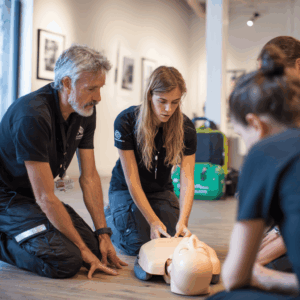 Here is where the magic of community begins. One trained person does not just help in a single moment. They create a ripple that spreads outward in beautiful, unpredictable ways.
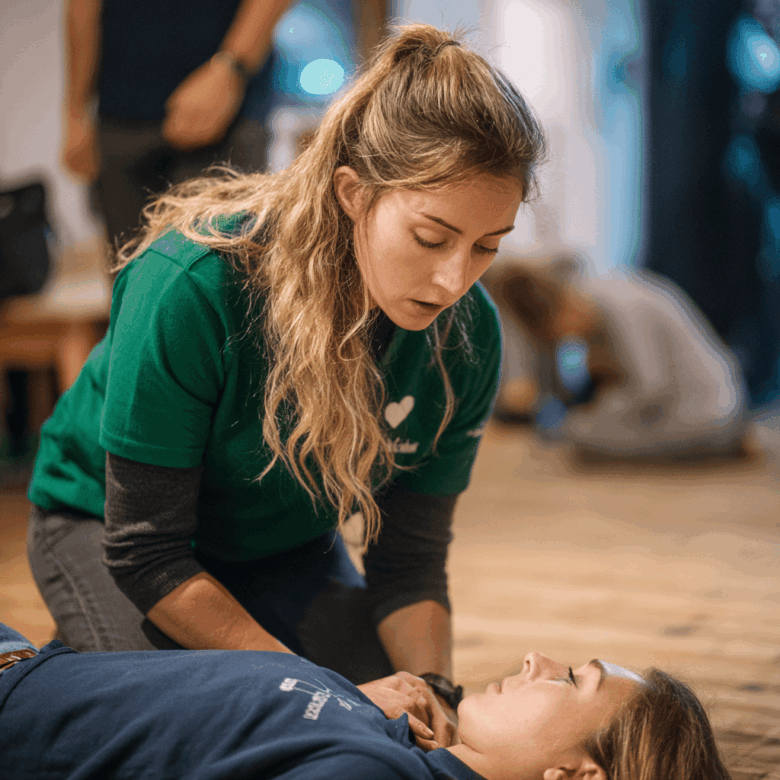
Imagine you take your weekend course this month. A few weeks later, you are at a local café when an elderly man begins choking on his sandwich. Because you practiced back blows on a mannequin just days ago, you act without hesitation. You dislodge the food. He breathes again. People applaud. Paramedics arrive and say, “Good work.” You go home shaken but proud.
Now here is the ripple: three people who witnessed that event sign up for first aid classes the following week. One of them is a teacher who then trains her students in basic safety. Another is a father who teaches his teenage children. The third is a shop owner who buys an AED for his store and trains his entire staff.
None of that would have happened if you had stayed on your couch that weekend. Your sixteen hours created a cascade of preparedness that will outlast you for years. That is the definition of massive impact from a small investment.
Communities That Train Together Thrive Together
There is a quiet, beautiful statistic that rarely makes headlines: communities with higher rates of first aid training have significantly better outcomes in emergencies. Cardiac arrest survival rates double or triple when a bystander knows CPR. Severe bleeding becomes survivable when someone knows how to apply a tourniquet. Choking deaths plummet when restaurant staff and parents are trained.
But the benefits go beyond statistics. Trained communities feel different. They are calmer. More connected. More willing to look out for one another. When you know that the person next to you on the bus, or the parent beside you at the playground, has basic first aid knowledge, you relax. You trust strangers more. You feel safer letting your children walk to the corner shop. That sense of collective security is not abstract—it is built one trained person at a time.
Think about your own street or apartment building right now. How many neighbours could perform CPR? How many could help if a child fell off a bike and split their chin open? If the answer is “not many,” then you have identified a beautiful opportunity. You could be the first. You could be the one who starts the ripple. And once one person trains, they inspire another. Soon, your block becomes known as “that street where everyone knows what to do.” That is not a small thing. That is community resilience in action.
The Hidden Gift: You Become A Calmer Human Being
Let us talk about an unexpected benefit of weekend first aid training that has nothing to do with emergencies and everything to do with everyday peace of mind. When you know what to do in a crisis, you stop fearing crises. That fear—low-grade, background, always humming—drains a surprising amount of mental energy. You do not even notice it until it is gone.
After a first aid course, you walk through the world differently. You notice potential hazards, but without anxiety. You see a wobbly ladder or a loose paving stone and think, “I could help if someone fell.” You hear a sudden crash in a shop and turn toward it instead of away. Your shoulders drop. Your breath deepens. You are not waiting for disaster—you are simply ready for it. And that readiness is profoundly calming.
One graduate of a weekend course described it as “finally getting off high alert.” She said, “I did not realise how much energy I spent worrying about ‘what if’ until I learned exactly what to do. Now when my mind starts to spin out with worst-case scenarios, I just think, ‘I have the training. I can handle this.’ And the spiral stops. That peace is worth more than the course cost ten times over.”
That is the quiet gift of first aid training. It does not just prepare you for the worst. It frees you to enjoy the best.
A Weekend Compared To A Lifetime Of Impact
Let us put this investment in perspective. A typical weekend includes roughly thirty waking hours. A first aid course takes about half of that—sometimes less. In exchange, you receive:
-
The ability to save a choking person in under two minutes
-
The knowledge to restart a stopped heart using CPR and an AED
-
The skill to stop life-threatening bleeding from an accident
-
The confidence to recognise a stroke, seizure, or allergic reaction
-
The calm authority to direct others during an emergency
Now compare that to other weekend activities. A Netflix marathon gives you entertainment that fades within days. A shopping trip gives you items that wear out or go out of style. A long brunch gives you a few happy hours. All of these are perfectly fine ways to spend time. But none of them can save a life. None of them ripple outward to protect your neighbours, your children, your colleagues. None of them give you the gift of walking through the world without fear.
First aid training is not just another item on your to-do list. It is a lever that multiplies every hour you invest. One weekend can lead to dozens of interventions over a lifetime. Dozens of moments where you are not helpless but helpful. Dozens of memories where you made a difference when it mattered most.
How To Turn Your Weekend Into A Community Movement
Ready to make your weekend count? Here is a positive, actionable plan:
Step One: Register for a certified first aid course in your area. Look for one that offers hands-on practice, a supportive instructor, and a fun, low-pressure environment.
Step Two: Invite a friend, neighbour, or family member to join you. Learning together doubles the impact and makes the experience more enjoyable.
Step Three: After you complete the course, post about it on social media. Not to brag, but to inspire. Use a simple caption like, “Best weekend investment I have ever made. Who wants to join me for the next one?”
Step Four: Talk to your workplace, children’s school, or local sports club about hosting a group class. Many instructors offer discounts for group bookings.
Step Five: Practice one skill each month as a family or with friends. Keep the knowledge fresh and the confidence high.
The Best Investment You Will Ever Make
Here is the bottom line. We all want to live in safer, kinder, more resilient communities. But safety does not arrive by accident. It is built by people like you—people who are willing to give one weekend to learn something that could save a life. Not because you have to, but because you want to be the person who shows up.
That weekend will come and go whether you take a course or not. The only question is whether you will emerge from it with a certificate and a new kind of confidence, or whether you will let another opportunity slip by. The choice is simple. The impact is massive. And your community is waiting for you to take the first step.
So go ahead. Claim that weekend. Learn those skills. Become the calm, capable person your neighbours need. Because the best investment you can ever make is not in stocks or property—it is in your own two hands, ready to help, ready to act, ready to save a life.